
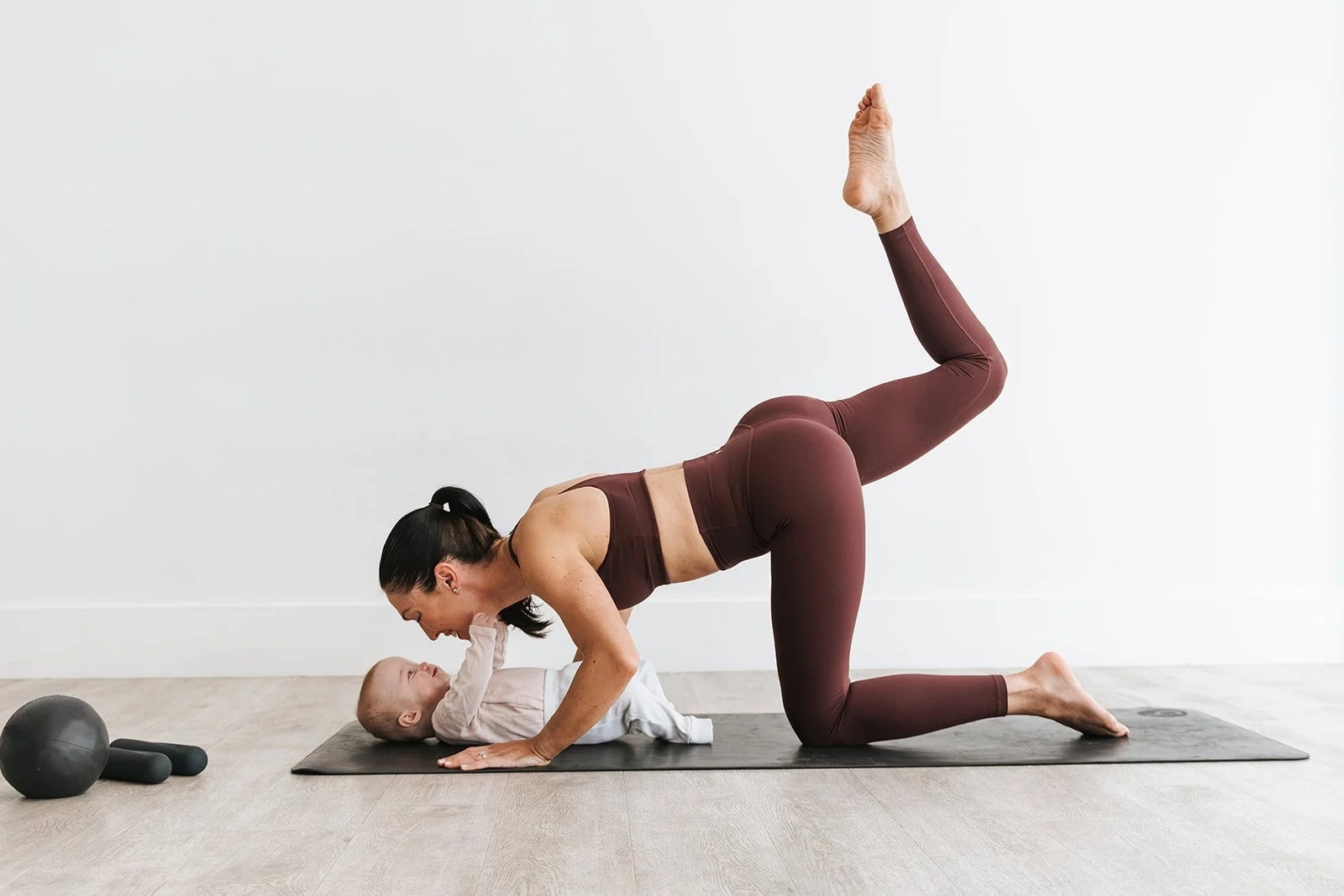
The first six weeks after having a baby can feel like a blur of feeding, changing, settling and recovering. It is also a time when many women are unsure about exercise. Should you rest completely until your six-week check? Can you start pelvic floor or abdominal exercises? What changes if you have had a caesarean birth?
The good news is that, for many women, gentle movement can begin before the traditional six-week check. An early postpartum workout is not about “bouncing back”, burning calories or returning immediately to your pre-pregnancy training. It is about supporting recovery, reconnecting with your body and gradually rebuilding the foundations needed for everyday life.
Every birth and recovery is different. Your starting point should reflect how you gave birth, any complications, your symptoms, your sleep and energy levels, and the advice of your healthcare team.
Do I need to wait six weeks before exercising after birth?
Not necessarily.
The six-week postnatal check is not a rule that says you must avoid all movement before six weeks and then return to everything afterwards. If you have had an uncomplicated birth and are medically well, gentle breathing, circulation exercises, pelvic floor awareness, mobility and short walks may be appropriate in the early days.
More demanding exercise, including heavier strength training, running, jumping and high-impact classes, usually requires more healing, preparation and an individual assessment. Recovery is a gradual process rather than a switch that flips at six weeks.
Before beginning exercise, follow the advice given by your obstetrician, GP, midwife or physiotherapist. If you had a complicated vaginal birth, caesarean birth, significant blood loss, infection, wound concerns or another medical complication, your timeline may need to be adjusted.
What should a first 6 weeks workout focus on?
A first 6 weeks workout should feel restorative and achievable. This stage is about laying foundations, not testing your fitness.
Useful areas to focus on include:
360-degree diaphragmatic breathing
Gentle pelvic floor connection and full relaxation
Deep abdominal muscle awareness
Comfortable spinal, rib and hip mobility
Circulation and lower-limb movement
Gradual walking
Simple functional strength for tasks such as feeding, carrying and getting up from the floor
Your workout does not need to be long. Five to fifteen minutes may be plenty, particularly when you are tired or feeding frequently. Small, regular amounts of movement can be more realistic than waiting for the perfect 45-minute window.
Gentle exercises to try in the first six weeks postpartum
The right exercises will depend on your recovery, but the following movements are often used in an early postpartum program.
1. Diaphragmatic breathing
Find a comfortable position and allow your lower ribs and abdomen to expand as you breathe in. As you breathe out, let the ribs soften back down without forcefully pulling in your stomach.
This helps restore coordination between your diaphragm, abdominal wall and pelvic floor. It can also reduce the tendency to brace or hold your breath during movement.
2. Pelvic floor connection and relaxation
Your pelvic floor muscles need to both contract and relax. On an exhale, gently lift around the openings of the pelvis, then fully release as you breathe in.
More squeezing is not always better. If pelvic floor exercises cause pain, pressure, difficulty emptying your bladder or bowels, or you cannot feel the muscles relax, seek individual advice from a pelvic health physiotherapist.
3. Pelvic tilts
In a comfortable lying, sitting or standing position, gently rock the pelvis backwards and forwards through a small, pain-free range. This can help restore movement through the lower back and pelvis without placing high demand on healing tissues.
4. Bridges
If comfortable, lie on your back with your knees bent. Exhale as you gently lift your hips, then lower with control. A bridge begins to reconnect the gluteal, abdominal and pelvic floor muscles while building strength for everyday tasks.
5. Gentle upper-back mobility
Feeding and holding a baby can leave your upper back feeling stiff. Movements such as cat cow, thread the needle or a gentle “bow and arrow” rotation can provide welcome mobility through the spine and ribs.
6. Clams
Lying on your side with your knees bent, keep your feet together and gently lift the top knee without rolling your pelvis backwards. This is a simple way to begin strengthening the hip muscles that support your pelvis during walking, stairs and carrying your baby.
All exercise should stay within a comfortable range. Stop or modify the movement if you experience pain, dizziness, increased bleeding, wound pulling, pelvic heaviness, leakage or uncontrolled abdominal doming.
Walking after birth: how much is appropriate?
Walking is exercise, and it needs to be progressed just like any other activity.
Start with what feels manageable, even if that is only a few minutes around the house or to the end of the street. As a general guide, I recommend expecting it to take the full first six weeks to gradually build up to a 30-minute walk. There is no need to reach 30 minutes sooner, and some women will need longer depending on their birth, healing and symptoms.
Increase your walking time or distance only when you feel comfortable during the walk and your symptoms do not increase later that day or the following day. You might begin with five minutes, repeat that distance until it feels comfortable, and then add a few minutes at a time.
More is not always better in the early weeks. A long pram walk can be a significant load when you are healing, sleep deprived and repeatedly lifting and feeding a baby. If bleeding becomes heavier, pain increases, your wound feels irritated or you notice pelvic heaviness, reduce the duration and seek advice if symptoms persist.
Exercise after a caesarean birth
A caesarean is both a birth and major abdominal surgery. Early movement can still be helpful, but your recovery deserves patience.
In the first weeks, focus on comfortable breathing, circulation, posture changes, gentle mobility and short walks. When getting out of bed, rolling onto your side first may reduce strain through the abdominal wall. Support your wound when coughing or sneezing if that feels more comfortable.
You do not need to avoid using your abdominal muscles completely. They are involved in breathing, standing, walking and caring for your baby. The goal is to gradually restore their function while respecting pain, fatigue and wound healing.
Seek medical advice if you notice increasing redness, heat, swelling, discharge, wound opening, worsening pain, fever or feeling unwell.
What about diastasis recti in the early postpartum period?
Abdominal separation, or diastasis recti, is common after pregnancy. The early postpartum period is an important window for healing and restoring how the abdominal wall functions. Although some natural recovery occurs after birth, research suggests that specific abdominal exercise can help reduce the inter-recti distance and improve abdominal strength and function.
This is why I recommend beginning appropriate rehabilitation early rather than simply waiting to see what happens. Breathing, targeted abdominal exercises and progressive whole-body movement can help restore strength, tension and coordination through the abdominal wall. A postpartum compression garment may also provide useful support during this early healing period, particularly when combined with rehabilitation exercises; however, compression should support your recovery rather than replace active retraining.
Signs your early postpartum workout needs to be modified
Pause, reduce the load or seek individual advice if exercise causes:
Increasing vaginal bleeding
Pelvic pressure, heaviness or a vaginal bulge sensation
Urinary or bowel leakage
Pelvic, abdominal, back or wound pain
Worsening abdominal doming that you cannot control
Dizziness, unusual shortness of breath or feeling unwell
Breast pain, redness or flu-like symptoms
Redness, discharge, opening or increasing pain around a caesarean or perineal wound
Urgent symptoms such as chest pain, difficulty breathing, fainting, a painful or swollen calf, severe headache, heavy bleeding, fever, or thoughts of harming yourself or your baby require prompt medical care.
Want a plan to guide your exercise after birth?
It can be difficult to know what to do when generic advice ranges from “just rest” to “return when you feel ready”. That is why I created two physio-led MOVE programs to support the different stages of postpartum recovery.
MOVE Early Postpartum Program: birth to six weeks
The MOVE Early Postpartum Program guides you through gentle, short and simple workouts designed specifically for the first six weeks after birth. It focuses on your pelvic floor, deep abdominal muscles, mobility and whole-body movement, with education delivered at the stage you need it.
It is designed for both vaginal and caesarean births, with options for women experiencing prolapse symptoms, pelvic floor dysfunction or diastasis recti.
MOVE Postpartum Program: from six weeks and beyond
When you are ready to progress, the MOVE Postpartum Program provides an eight-level pathway with five Pilates-style workouts per level, ranging from 10 to 40 minutes. It combines progressive exercise with education about your pelvic floor, core, diastasis recti, caesarean scar care, bladder and bowel health, prolapse symptoms and returning to exercise.
Both programs are included in a MOVE membership, so you can move from early recovery into progressive strengthening without having to guess what comes next.
Explore the MOVE Early Postpartum and Postpartum Programs and start your free seven-day trial.
The takeaway
Exercise in the first six weeks after birth does not need to be intense to be worthwhile. Gentle breathing, pelvic floor and abdominal reconnection, mobility, functional strength and gradually progressed walking can all support your recovery.
Your postpartum timeline is individual. Start small, pay attention to symptoms and remember that rest and recovery remain part of the program. The aim is not to rush back. It is to build a strong, confident foundation for whatever movement comes next.
Medical disclaimer: This article provides general information only and is not a substitute for individual medical or physiotherapy advice. Your recovery may differ depending on your birth, symptoms and medical history. Follow the guidance of your healthcare team and seek assessment if you are concerned.