

Preparing for birth often means packing a hospital bag, writing a birth plan, and attending antenatal classes. But one of the most important parts of birth preparation is often overlooked: preparing your body, particularly your pelvic floor.
Whether you're planning a vaginal birth, a caesarean birth, or simply hoping to feel more confident heading into labour, seeing a pelvic floor physiotherapist during pregnancy can help you understand your body, prepare for birth, and support your recovery afterwards.
As a Women's Health Physiotherapist, I often tell my patients that birth preparation isn't about achieving the "perfect birth." It's about giving yourself the knowledge and tools to work with your body, regardless of how your birth unfolds.
Why Is Pelvic Floor Preparation Important?
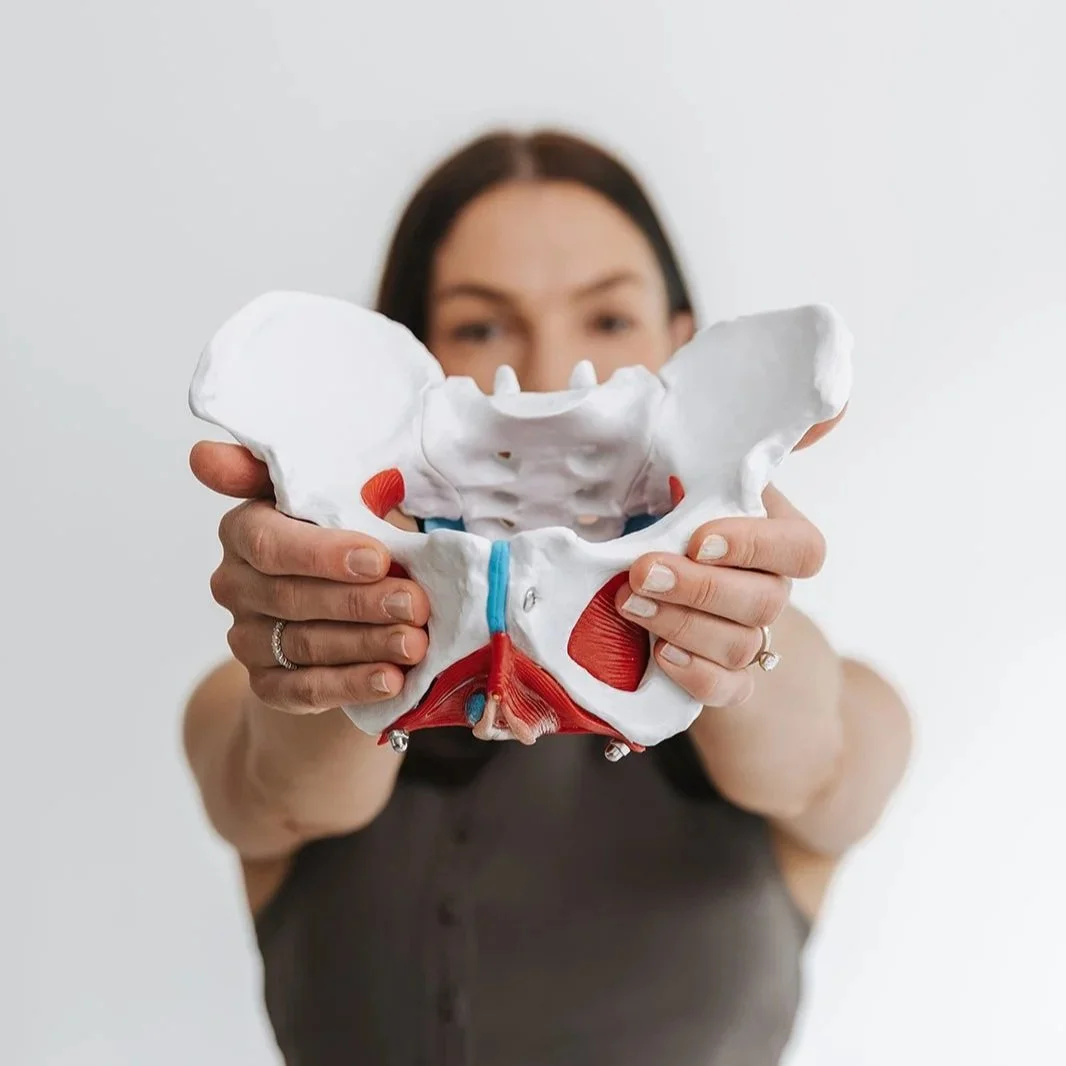
Your pelvic floor is a group of muscles that supports your bladder, bowel and uterus.
During pregnancy, these muscles work incredibly hard to support your growing baby. During a vaginal birth, they then need to stretch to more than three times their resting length to allow your baby to pass through the birth canal.
While many women spend pregnancy focusing on strengthening their pelvic floor, labour requires something different. Your pelvic floor needs to be able to relax.
In fact, during the pushing stage of labour, the role of the pelvic floor isn't to push your baby out, it is to lengthen, stretch and "get out of the way" while your uterus does the work through contractions. If these muscles remain tight or overactive, they can create extra resistance during birth.
Can a Tight Pelvic Floor Affect Labour?
Yes. Research shows that around 1 in 5 women actually contract their pelvic floor when they are asked to "push" or "bear down." This is called a paradoxical contraction, where the muscles do the exact opposite of what they're intended to do. This may occur because of:
pelvic floor overactivity
poor muscle coordination
previous pelvic pain
longstanding constipation
fear or guarding during labour
Studies have shown this can contribute to a longer second stage of labour, which is associated with higher rates of intervention, severe perineal tears and ongoing pelvic floor dysfunction.
The good news is that this coordination can often be assessed and retrained before birth.
How Can a Pelvic Floor Physio Help With Birth Preparation?
A pelvic floor physiotherapist provides far more than pelvic floor exercises. Birth preparation is about helping your body work efficiently during labour while protecting your pelvic floor for recovery afterwards.
During a birth preparation appointment we may include:
1. Pelvic Floor Assessment
An internal assessment allows us to assess:
muscle strength
muscle relaxation
pelvic floor coordination
areas of tension
whether you're able to lengthen your pelvic floor when asked to push
This gives us valuable information to individualise your birth preparation.
2. Teaching Pelvic Floor Relaxation
One of the biggest goals in late pregnancy is learning how to consciously relax your pelvic floor.
We may use:
diaphragmatic breathing
visualisation techniques
pelvic floor down-training
manual feedback
pregnancy stretches
positions that encourage pelvic opening
These strategies help you become familiar with releasing tension before labour begins. We can also discuss how using epidurals can be a positive way to relax your pelvic floor too.
3. Learning How to Push Effectively During Labour
Some women experience the fetal ejection reflex, where their body naturally bears down with very little conscious effort. Others, particularly those with an epidural, may need to actively push with their contractions.
Our role as pelvic floor physiotherapists isn't to coach you through pushing during labour. Instead, we help you understand how your pelvic floor responds so that, if active pushing is needed, you're less likely to unintentionally tighten your pelvic floor rather than relax and lengthen it. We can also discuss breathing and pelvic floor coordination to help you feel more prepared heading into birth, while your midwife or obstetrician guides you during labour.
4. Perineal Massage
Perineal massage is one of the most evidence-based ways to prepare the tissues around the vaginal opening for birth. We generally recommend commencing from around 34 weeks of pregnancy.
Research has shown that perineal massage can:
reduce the risk of severe (3rd and 4th degree) tears
reduce the likelihood of requiring an episiotomy
decrease perineal pain after birth
improve scar healing
It can also help women become more comfortable learning to relax their pelvic floor during stretching, an important skill for labour itself.
During your appointment we can teach you the correct technique and answer any questions you may have. You are more than welcome to bring your partner along to appointments to learn it too.
5. Birth Preparation Stretches
A pelvic floor physiotherapist can guide you through birth preparation stretches to help improve mobility, reduce muscle tension, and encourage pelvic floor relaxation. These stretches are tailored to your body and any pregnancy-related aches or pains you may be experiencing, such as pelvic girdle pain or back pain.
If you'd like to get started at home, you can also try my FREE Birth Preparation Mobility Class, which includes gentle stretches and mobility exercises designed to help prepare your body for labour.
What If I'm Having a Planned Caesarean Birth?
Birth preparation isn't only for women planning a vaginal birth. Even if you're having a planned caesarean, your pelvic floor has still spent months supporting your pregnancy. Following a caesarean birth, many women naturally compensate for reduced abdominal strength by overusing their pelvic floor muscles. This can contribute to:
pelvic floor overactivity
pelvic pain
urinary urgency
painful intercourse
difficulty reconnecting with the abdominal muscles
Learning pelvic floor relaxation, breathing strategies and core coordination before birth can make your recovery smoother and help reduce the risk of pelvic floor dysfunction afterwards. And because birth plans sometimes change, preparing for both vaginal and caesarean birth helps you feel confident regardless of how your baby arrives.
Can Birth Preparation Reduce My Risk of Prolapse?
No one can completely prevent pelvic organ prolapse, as many factors contribute to its development, including pregnancy itself, genetics, ageing, constipation and heavy lifting.
One of the important parts of birth preparation is understanding the factors during labour that may place increased strain on the pelvic floor. This can include a prolonged pushing stage, significant perineal trauma, and instrumental deliveries such as a high forceps delivery, which are associated with a higher risk of pelvic floor injury and prolapse.
As pelvic floor physiotherapists, we can help you understand these risk factors, assess your pelvic floor function, and discuss strategies that may help optimise your pelvic floor during labour, such as improving relaxation and coordination, reducing unnecessary tension, and exploring birth positions that are appropriate for your individual circumstances.
It’s important to remember that interventions such as forceps, vacuum delivery or an episiotomy are sometimes necessary and can be lifesaving for you or your baby. If these are required, your obstetrician and/or midwife will always weigh the risks and benefits carefully in the context of your labour.
How Does a Pelvic Floor Physio Help After Birth?
Pelvic Floor Physiotherapy doesn't end once your baby arrives. A postpartum pelvic floor assessment can help identify:
pelvic floor weakness or overactivity
abdominal muscle separation (diastasis recti)
scar healing after vaginal or caesarean birth
bladder or bowel symptoms
prolapse symptoms
Early assessment allows any concerns to be addressed before they become long-term issues. Many women assume leaking, heaviness or pelvic pain are simply "part of motherhood," but these symptoms are common, not normal, and treatment is available.
When Should I See a Pelvic Floor Physio for Birth Preparation?
I generally recommend booking a birth preparation appointment around 34 of pregnancy.
Knowledge is One of the Best Birth Preparation Tools
When it comes to birth preparation, education is power.
Understanding how your pelvic floor works, what happens during labour, and the factors that can increase your risk of birth trauma allows you to make informed decisions and head into labour feeling more prepared. While no one can predict exactly how birth will unfold, learning how to optimise your pelvic floor, understanding your options, and knowing what to expect can all help support your birth experience and your recovery afterwards.
If you're around 34–36 weeks pregnant, this is the ideal time to see a Women's Health Physiotherapist for birth preparation. We'll assess your pelvic floor, teach you strategies to help prepare your body for labour, answer any questions you have, and help you feel confident as you approach birth, whether you're planning a vaginal birth, a caesarean birth, or simply preparing for whatever path your birth takes.
If you’d like to book in for a birth preparation appointment, click HERE.