
A women’s health physio guide to diastasis recti
One of the questions I get asked most in clinic and online is about diastasis recti, or abdominal separation (DRAM). There’s still a lot of misinformation around it, and I see many women focused on getting rid of the gap. But some space between the abdominal muscles is normal, even before pregnancy. I had a 1.5 cm gap before I was pregnant!
So I don’t judge recovery by the gap alone. I’m more interested in whether you can create tension across your midline and how your abdominal wall works when you move, lift and exercise. That’s what I focus on with my patients, and in my own training.
Here are five things I come back to when supporting abdominal strength through pregnancy and postpartum.
1. Keep your core and abdominal muscles strong during pregnancy
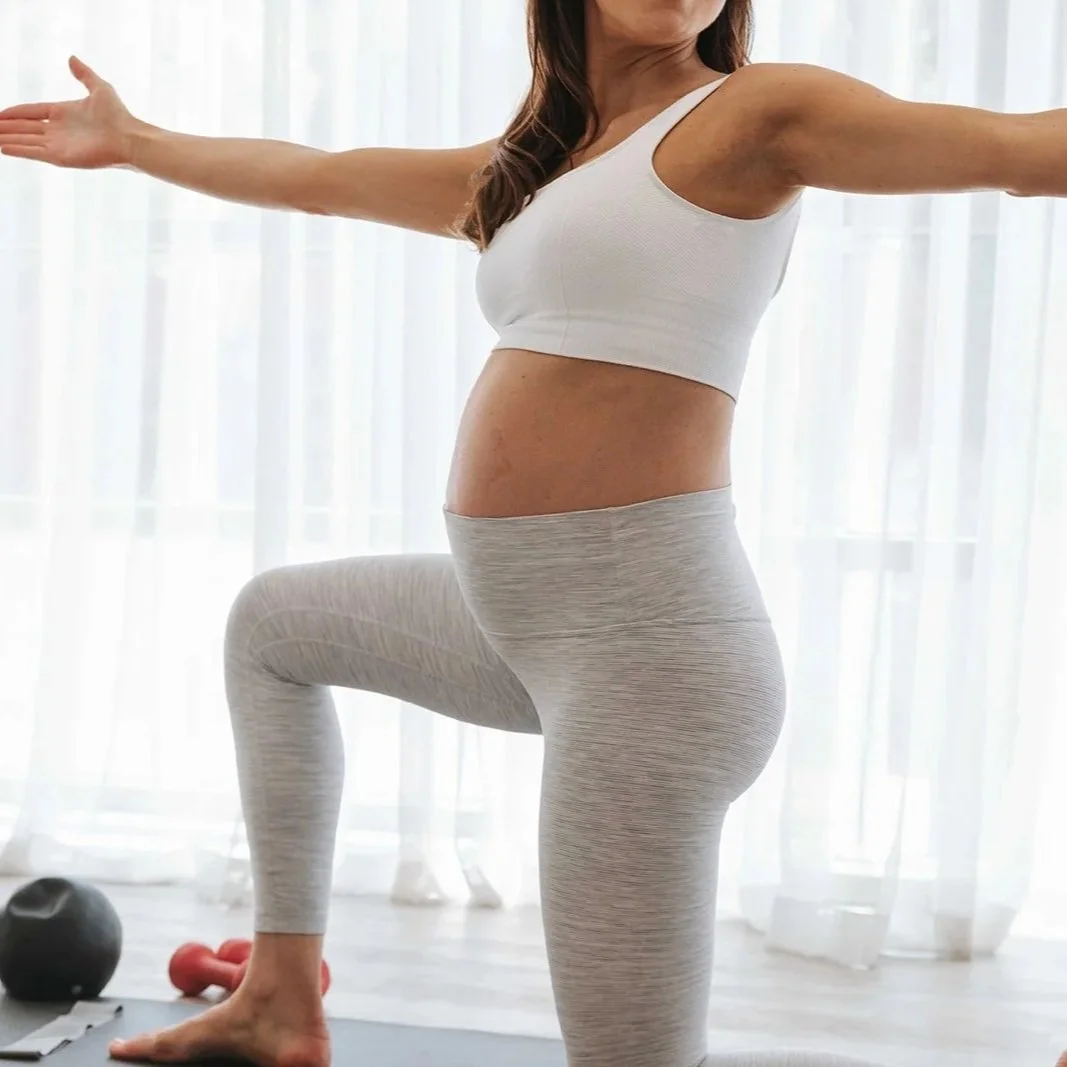
In my first pregnancy I stopped doing core exercises because I was worried they could cause abdominal separation. When I was pregnant with the twins, I actually stepped up my core training - in line with the evidence!
If your pregnancy is uncomplicated, exercise and strength training can usually continue with adjustments as needed. Exercise has benefits for your health and wellbeing, and current research doesn’t support a blanket ban on abdominal exercise (ACOG, 2020; Theodorsen et al., 2024). It won’t guarantee you avoid diastasis recti, but it can help you maintain strength for pregnancy and life with a baby.
It also means that when you are postpartum and ready to rehabilitate your abdominals, you have a good baseline of strength and health connective tissues.
2. Start early with pelvic floor and core work, including crunches!
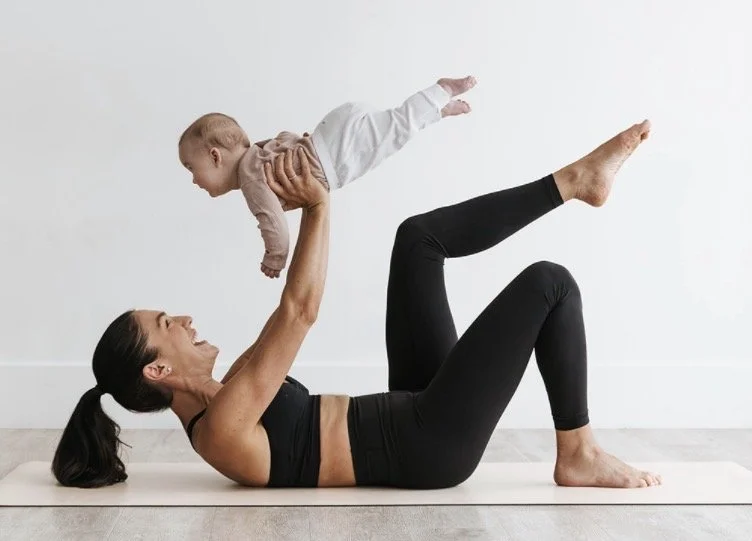
I see the first 6–12 weeks after birth as a valuable window to make the most of early recovery and get pelvic floor and core work started.
Oestrogen and progesterone drop sharply after birth, and lab research shows fascia responds to these hormones. This may influence how the midline connective tissue remodels, including the linea alba between your rectus muscles. For me, it’s a chance to start pelvic floor muscle exercises and gentle abdominal loading that suit your birth and recovery - not a deadline to close the gap or a window that slams shut at 12 weeks.
That’s why my MOVE Early Postpartum Program includes guided movement from day one. For some people, a gentle curl-up or crunch may be appropriate from around week one or two, depending on birth, symptoms and recovery. A small early trial and a later curl-up study both offer reassurance that abdominal work can be included thoughtfully (Simpson & Hahne, 2023; Gluppe et al., 2023). It’s not one-size-fits-all.
3. Wear compression garments
I think of compression as a comfort and support tool. If a comfortable garment helps you feel more held during the early weeks or after a caesarean birth, that’s a reasonable reason to wear it. When fit well, they should support your core muscles (which may feel absent!) and prevent back pain, reduce swelling too.
It won’t strengthen your muscles or “put the gap back together” on its own. The research on support garments as a stand-alone treatment for DRAM is limited, so I wouldn’t rely on compression alone.
4. Load your body in all planes of movement
I don’t want you to feel that core exercise only counts if you’re lying on your back. Think about how you use your body in a normal day: reaching, rotating, bending, carrying, pushing, pulling and getting up from the floor.
I like to include a mix of positions: standing, kneeling, side-lying and four-point kneeling, for example, and movements that challenge the abdominal wall in different ways. You don’t need to avoid a direction just because you have DRAM. Start with a version you can manage and adjust the range or load based on your symptoms, control and confidence.
5. Keep challenging your core - and stay CONSISTENT
This is the bit I think often gets missed! To get stronger, your muscles need a challenge+++. Too often postpartum women are wrapped up in cotton wool and they’re doing beginner style exercises for way too long!
When a movement feels controlled and repeatable, try progressing one thing: resistance, weight, range, repetitions, sets or complexity.
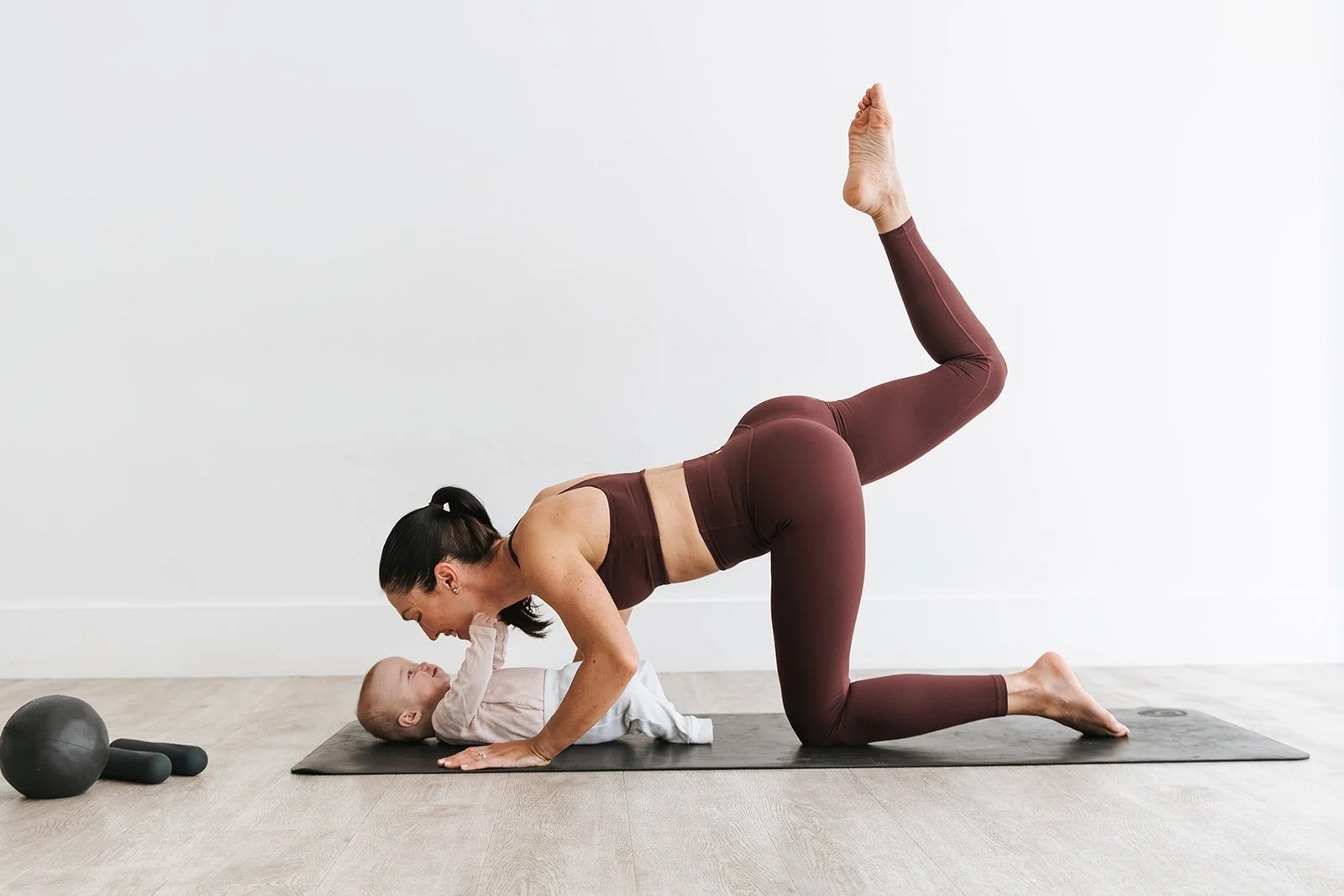
That doesn’t mean making every workout harder or pushing through symptoms. Find a level that feels like work while you can still breathe and control the movement. And please don’t worry if you can only fit in short sessions; consistency over time matters more than finding a “perfect” exercise. If you’re unsure where to start, a women’s health physio can help you work out a plan that fits your recovery and goals.
The takeaway
You don’t have to wait until your 6-week check to begin gentle movement after birth! The MOVE postpartum programs give you a structured way to start with early recovery, then gradually build strength as you return to exercise.
👉 14 weeks of programs, designed by a women’s health physio
👉 Early postpartum movement from day 1, with a program for the first 6 weeks
👉 An 8-week postpartum program to continue from 6 weeks after birth
👉 Pilates-style workouts, pelvic floor exercises and abdominal strengthening
👉 Suitable after vaginal and caesarean births
Sign up today with 20% off using “MOVE20” at checkout! Check it out HERE
There’s a 7-day free trial, and the annual plan works out to $6.14 per week with a 20% discount.
Your recovery is individual, so follow your healthcare team’s advice and move at a pace that feels right for you.
References
American College of Obstetricians and Gynecologists. (2020). Physical activity and exercise during pregnancy and the postpartum period (Committee Opinion No. 804). Obstetrics & Gynecology, 135(4), e178–e188. https://doi.org/10.1097/AOG.0000000000003772
Dukic, J., Johann, A., Henninger, M., & Ehlert, U. (2024). Estradiol and progesterone from pregnancy to postpartum: A longitudinal latent class analysis. Frontiers in Global Women’s Health, 5, Article 1428494. https://doi.org/10.3389/fgwh.2024.1428494
Beer, G. M., Schuster, A., Seifert, B., Manestar, M., Mihic-Probst, D., & Weber, S. A. (2009). The normal width of the linea alba in nulliparous women. Clinical Anatomy, 22(6), 706–711. https://doi.org/10.1002/ca.20836
Benjamin, D. R., Frawley, H. C., Shields, N., Peiris, C. L., van de Water, A. T. M., Bruder, A. M., & Taylor, N. F. (2023). Conservative interventions may have little effect on reducing diastasis of the rectus abdominis in postnatal women: A systematic review and meta-analysis. Physiotherapy, 119, 54–71. https://doi.org/10.1016/j.physio.2023.02.002
Fede, C., Pirri, C., Fan, C., Albertin, G., Porzionato, A., Macchi, V., De Caro, R., & Stecco, C. (2019). Sensitivity of the fasciae to sex hormone levels: Modulation of collagen-I, collagen-III and fibrillin production. PLOS ONE, 14(9), e0223195. https://doi.org/10.1371/journal.pone.0223195
Gluppe, S. B., Ellström Engh, M., & Bø, K. (2023). Curl-up exercises improve abdominal muscle strength without worsening inter-recti distance in women with diastasis recti abdominis postpartum: A randomised controlled trial. Journal of Physiotherapy, 69(3), 160–167. https://doi.org/10.1016/j.jphys.2023.05.017
Simpson, E., & Hahne, A. (2023). Effectiveness of early postpartum rectus abdominis versus transversus abdominis training in patients with diastasis of the rectus abdominis muscles: A pilot randomized controlled trial. Physiotherapy Canada, 75(4), 368–376. https://doi.org/10.3138/ptc-2021-0111
Skoura, A., Billis, E., Papanikolaou, D. T., Xergia, S., Tsarbou, C., Tsekoura, M., Kortianou, E., & Maroulis, I. (2024). Diastasis recti abdominis rehabilitation in the postpartum period: A scoping review of current clinical practice. International Urogynecology Journal, 35(3), 491–520. https://doi.org/10.1007/s00192-024-05727-1
Theodorsen, N.-M., Moe-Nilssen, R., Bø, K., & Haukenes, I. (2023). Effect of exercise on the inter-rectus distance in pregnant women with diastasis recti abdominis: An experimental longitudinal study. Physiotherapy, 121, 13–20. https://doi.org/10.1016/j.physio.2023.08.001
Theodorsen, N.-M., Bø, K., Fersum, K. V., Haukenes, I., & Moe-Nilssen, R. (2024). Pregnant women may exercise both abdominal and pelvic floor muscles during pregnancy without increasing the diastasis recti abdominis: A randomised trial. Journal of Physiotherapy, 70(2), 142–148. https://doi.org/10.1016/j.jphys.2024.02.002
Woodley, S. J., Lawrenson, P., Boyle, R., Cody, J. D., Mørkved, S., Kernohan, A., & Hay-Smith, E. J. C. (2020). Pelvic floor muscle training for preventing and treating urinary and faecal incontinence in antenatal and postnatal women. Cochrane Database of Systematic Reviews, 2020(5), Article CD007471. https://doi.org/10.1002/14651858.CD007471.pub4